


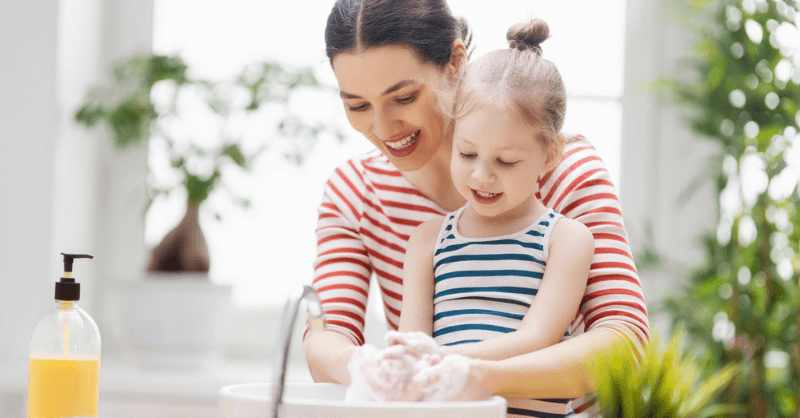
Summary:
Personal hygiene is important for kids to stay healthy and avoid sickness. Teaching kids to wash their hands, bathe, brush their teeth, and stay safe with food helps keep them healthy. Making these habits fun will help them practice good hygiene for life.
Personal hygiene for kids is very important. Children often touch everything around the house and get their hands dirty, and they may grab food after playing outside without washing properly. Most parents find it hard to tolerate their kids being dirty, and it becomes worrying when children are not hygienic enough and frequently fall sick.
It’s easy to help your kids develop good personal hygiene habits. Just keep reading this blog and follow the simple tips.
What is Personal Hygiene?
Hygiene means doing simple things that help keep our bodies healthy and protect us from diseases. Personal hygiene, especially, is about cleaning, grooming, and caring for our bodies every day. This includes habits like washing hands, bathing regularly, brushing teeth, and wearing clean clothes.
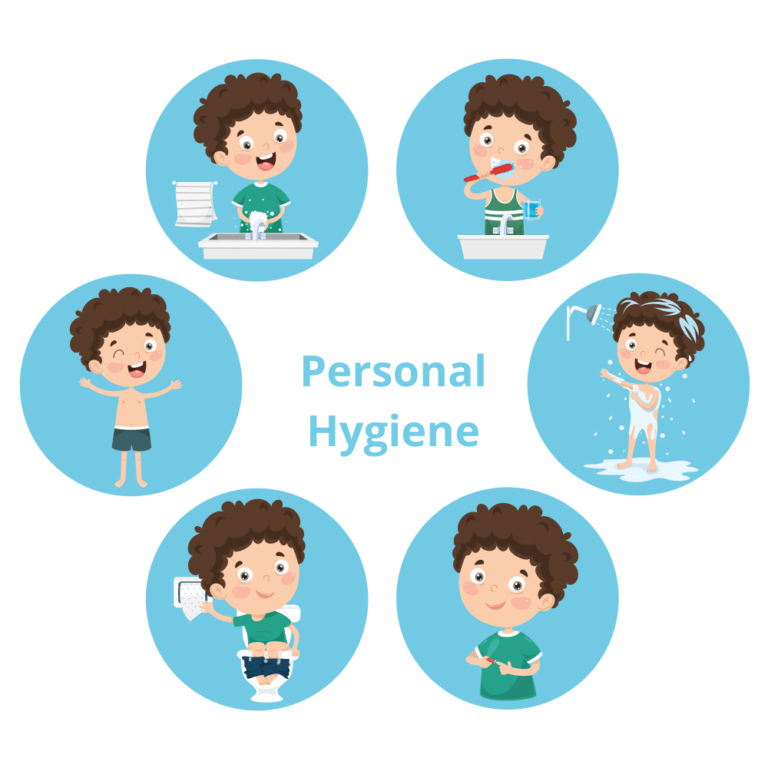
Personal hygiene helps keep germs away and prevents sickness. Many germs spread through touch and the face, so staying clean is very important. Children get sick more easily, so it is important to teach them good hygiene habits and help them follow a daily cleaning routine. This helps them stay healthy and feel confident.
Why should you teach personal hygiene to kids?
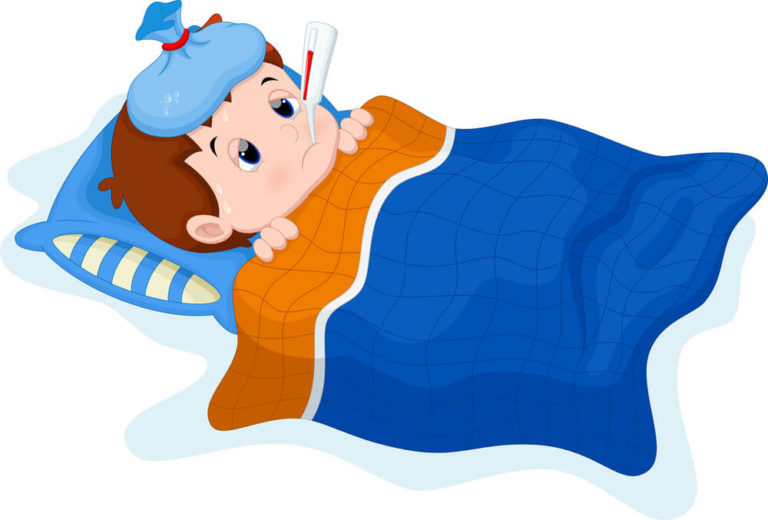
Personal hygiene helps keep children healthy and happy. It protects them from germs and prevents illness. It also helps them feel clean, fresh, and confident. But children’s bodies are still growing, and their immune systems are not fully strong yet.
Kids love to play, touch things, and explore their surroundings. While doing this, they easily pick up dirt and germs. They may not always notice when something is dirty, and they often forget to wash their hands or clean themselves. This makes them more likely to get sick.
This is why it is important to teach children good hygiene habits early. Simple routines like handwashing, brushing teeth, and bathing every day can help prevent infections, bad odors, and health problems. These habits also help children feel confident and independent as they grow.
Parents play a big role in teaching hygiene. Showing simple steps and practicing them daily helps children build healthy routines for life.
Teaching kids good hygiene from an early age helps them stay healthy, build confidence, and grow into responsible, independent individuals.
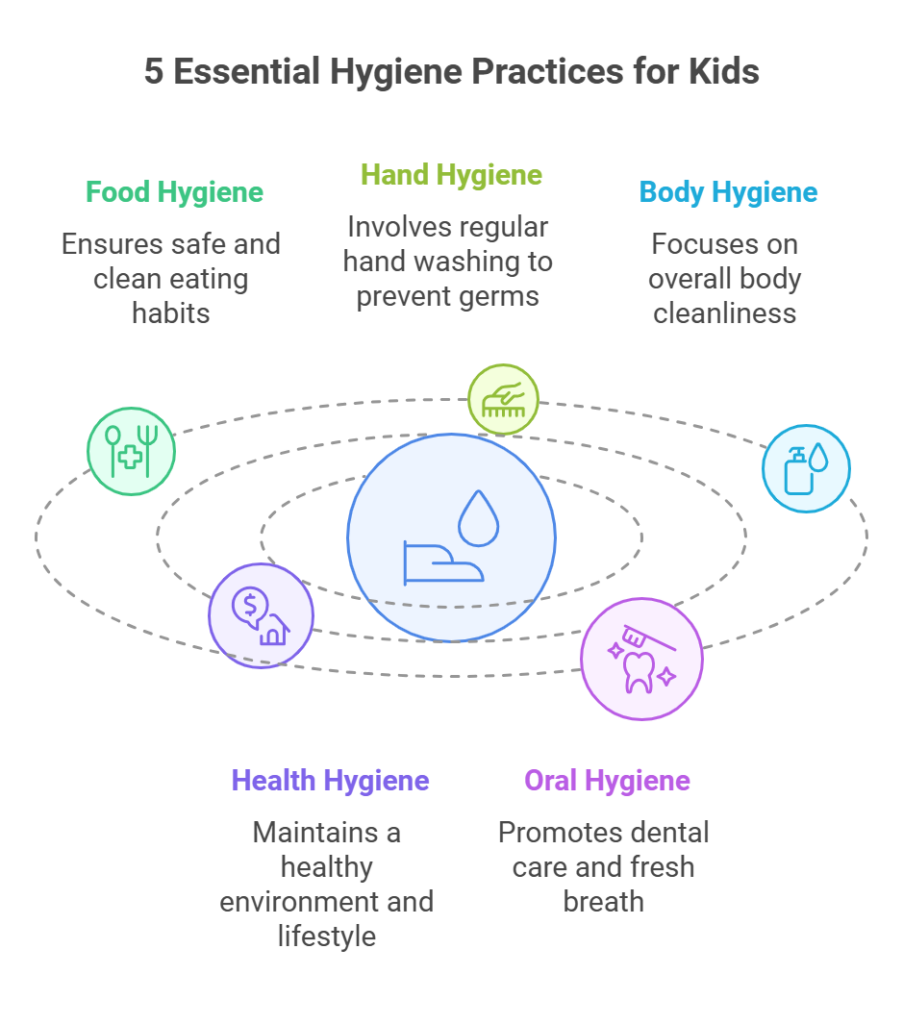
5 Types of personal hygiene for kids
Kids should always stay clean, both at home and outside. This means taking care of their bodies every day. Personal hygiene keeps them healthy, stops germs from spreading, and helps them build a healthy lifestyle. Here are some easy tips to help your kids stay clean and healthy:
- Food hygiene
- Hand hygiene
- Body hygiene
- Health hygiene
- Oral hygiene
1. Food hygiene
According to the World Health Organization, unsafe food makes around 600 million people — almost 1 in 10 — sick every year, and about 420,000 people die from foodborne illnesses. Children under 5 are especially at risk. Eating dirty food, contaminated fruits and vegetables, or undercooked meat can cause stomach aches, vomiting, diarrhoea, and sometimes more serious illnesses.
Keeping food clean helps stop germs, bacteria, and viruses from spreading and keeps kids healthy. Teaching children simple food hygiene habits builds a healthy lifestyle and prevents tummy bugs. Kids should wash their hands with soap and water before eating and after using the toilet, keep raw meat separate from ready-to-eat foods, and cook food until it is steaming hot.
Food should be stored at the right temperature in the fridge, freezer, or cupboard, and spills or messes should be cleaned quickly using clean cloths or disinfectants. Following these habits every day helps children stay healthy, strong, and confident.
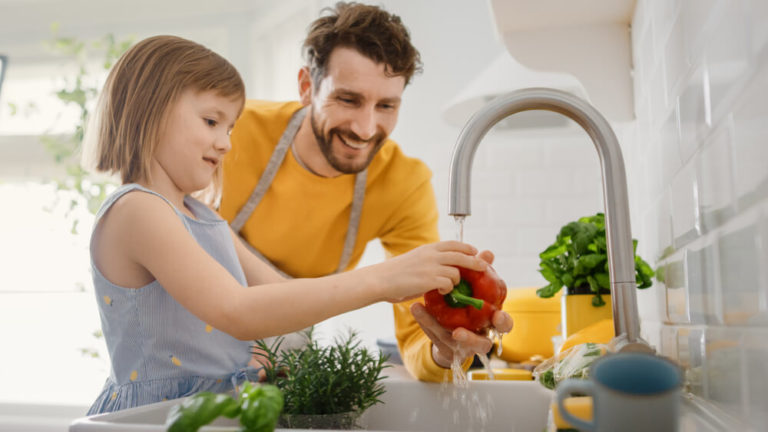
- Always wash your hands with clean water and soap before touching foods.
- Remember to wash your hands every time after handling raw meat or seafood, whether you are cooking or your kids are helping in the kitchen.
- Wash your hands every time after using the toilet and before returning to the food.
- Always store meat, fish and poultry foods in sealed and separate containers.
- Never store raw and fresh foods with cooked foods.
- Use different utensils to handle raw meat, vegetables, sandwiches etc.
- Rinse fresh fruits, salad greens and vegetables with clean water, especially before serving these uncooked.
- Avoid serving undercooked foods, unpasteurised milk and cheese products to your kids.
- Remember to eat foods soon after they are cooked. If you are serving the foods for later, refrigerate right away.
- Teach your kids to use a clean cloth to wipe hands and mouth.
- Cover the food containers with lids
You can teach these basics about food hygiene to your kids, meanwhile, talk to them about germs and bacteria.
You may find it useful: 20 Healthy Foods to Eat Everyday According to Expert Advice
2. Hand hygiene
A simple act like washing hands can prevent your kids from getting sick. It’s the most crucial and easy-to-achieve hygiene habit. But kids don’t remember to wash their hands. Therefore, it’s your job to remind the kids to wash their hands from time to time.
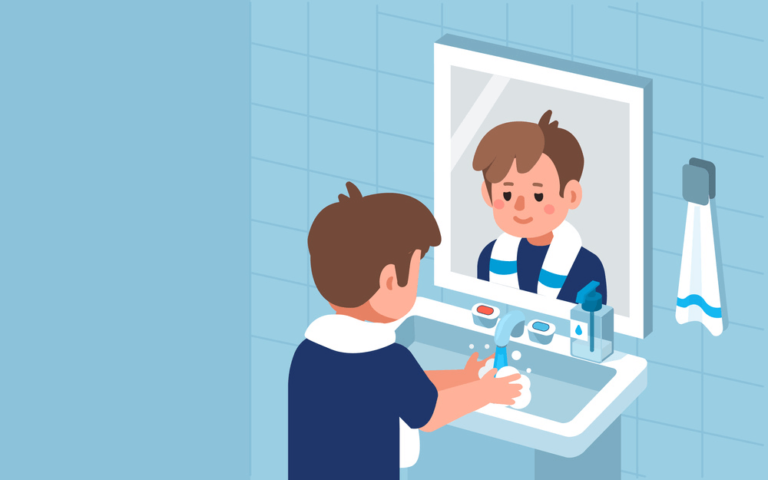
- As soon as your kids return home from school or play, you should always remind them to freshen up first before touching any food or anything else.
- Demonstrate the proper ways to wash hands thoroughly.
- Trimming nails is very important because a lot of germs and dirt can amass under nails. And kids tend to bite their nails which you should discourage them from doing so. Cut your kid’s nails routinely and teach them to do so because they should be able to cut their fingernails around the age of 7.
- Remind your kids to wash their hands every time they pet an animal.
You should also teach your kids to make a habit of washing their hands every time after they:
- Use the toilet.
- Clean the house.
- Visit a sick friend or relative.
- Sneeze, cough and clear their nose. It’s better to develop a habit of using a handkerchief.
Handwashing is an activity that takes less than a minute, and it’s the most effective and easiest way to keep germs and infections away.
3. Body hygiene
One of the most important aspects of personal hygiene is taking care of your body. Body hygiene means to keep every part of your body clean to stay healthy. Healthy body hygiene habits include taking care of the followings:
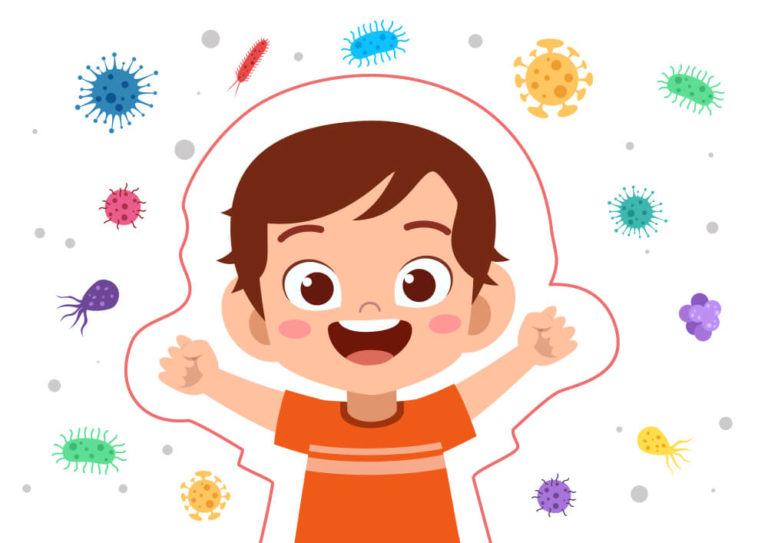
Skin
The skin is the biggest organ in our body. It protects us from germs and other things. But, if the skin gets scratched or hurt, it can catch bacteria. Too many germs on the skin can cause body odour and skin problems, like infections, lumps, and boils. To keep your child’s skin clean, you can do the following:
- Teach your kids to have a bath every day. It’s also important to take a shower before or after school and certainly after playing outside.
- Teach them how to clean different parts of the body – the hands, armpits, legs, feet, joints, back, belly button, elbows, and knees. You should show them first how to do it and then let them practice it.
- Keep different soaps for bathing for your kids.
- Ensure your kids don’t rush while having a bath or shower because they might overlook cleaning their ears and neck.
Hair
Hair hygiene is as important as skin hygiene. Dirty hair can cause problems like lice, dandruff, and scalp infections. Keeping hair clean helps avoid these issues.
- Kids are susceptible to getting head lice. So, you should teach your kids to wash their hair at least twice a week.
- You should also teach your kid not to share personal objects like combs, pillows, and hats with others.
- If your girl has long hair, tell her not to comb it carefully with wide tooth-comb. Tying the hair up will prevent the accumulation of dirt on hair.
Feet
You’ve probably heard the phrase “smelly feet.” But do you know why it happens? It’s because of bacteria on the feet. This is worse when bacteria mix with sweat. If your kids wear shoes without socks all day, more dirt builds up on their feet. Here are some simple steps to help keep their feet clean:
- Teach your kids to wash their feet every time they come home from school or after playing.
- Instruct them to clean their feet properly by rubbing with soap between the toes and under toenails.
- Afterwards, use a clean cloth to dry the feet.
- Encourage your kids to keep their shoes clean.
- If your kid gets wounded during playing, teach them how to keep the wounds clean.
- Afterwards, use a clean cloth to dry the feet.
4. Health hygiene
Most kids catch a cold 6 to 8 times a year before they turn 6. That’s why it’s important to keep your child’s hygiene in check. This helps stop germs and bacteria from spreading.
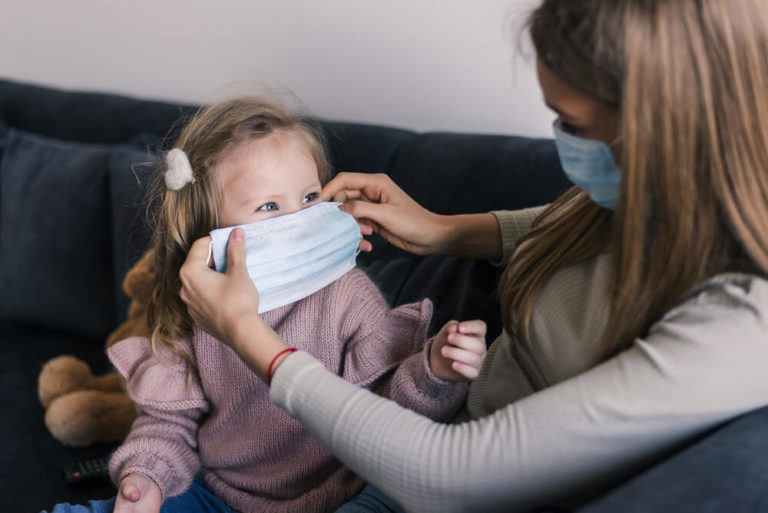
- When your kid is down with flu or any other infectious sickness, don’t send your child to school or to play. Avoiding close contact with other kids will stop the spreading of germs.
- Cover the mouth with tissue or handkerchief while sneezing or coughing. Instilling this habit in your kids will stop the spreading of germs.
- Using hand sanitiser is another good habit that you should teach your kids. In cases like when the water is too cold to use, or you don’t have access to soap or water, a hand sanitiser can be really convenient, especially in the winters.
- Always use separate bedclothes for children in the family.
- Try to maintain a clean surrounding. Unclean desk, bedroom and toilet mean an abundance of germs. So, you should teach your kids to keep their room clean at all times.
- If your kid spill or drop something on the floor, you should teach them to clean.
- Teach your kids about the basics of toilet and bathroom cleanliness standards. For instance, flushing the toilet after using, throwing used tissue and other rubbish in the bin etc.
- Make sure your kids change their clothes twice a day and put away the dirty clothes in the laundry basket.
5. Oral hygiene
Oral hygiene plays a key role in overall health. Neglecting it can lead to bad breath, cavities, and other oral issues. Fortunately, teaching your children to maintain good oral hygiene can prevent these problems. Here’s how you can guide them, including the use of oral products, to keep their mouths healthy.
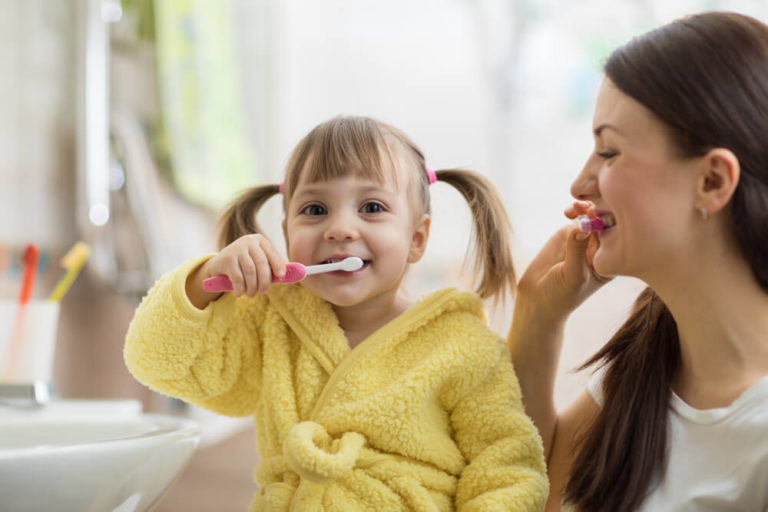
- Make sure your kids brush their teeth twice a day.
- Teach them how to floss as well.
- Kids love candies, but it’s important to wash the mouth afterwards. So, remind your kids to do so, even after having food.
- You should also tell your kids to gargle with warm salt water or use mouth wash once in a while.
- And it’s recommended to visit the dentist every six months.
Keep in mind that no habit develops overnight. And teaching your kids about personal hygiene can be challenging. Therefore, you should be patient while implanting these healthy habits into kids.
What are the 10 Personal Hygiene for Kids?
When you teach your kids about personal hygiene, they might not always do it on their own. Kids don’t always listen, so just telling them what to do may not work.
You need to help them understand that personal hygiene is important. Good hygiene keeps them safe and shows others they care about themselves.
Here is a list of tasks to help your kids learn good hygiene habits.
1. Introduce the concepts of germs and bacteria
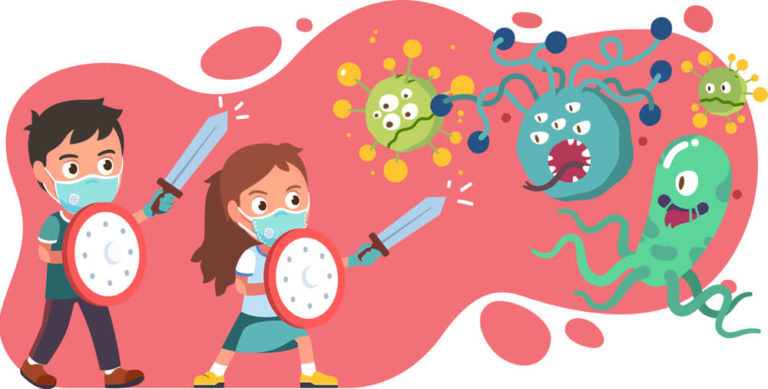
You should teach your kids about germs and bacteria early. If they know how germs spread on hands, toys, doorknobs, or surfaces, and what happens when they don’t stay clean, they will understand personal hygiene and handwashing better. But keep it simple. Don’t make it too scary, or they might become afraid of microorganisms.
2. Elucidate good and bad habits
Kids often follow their instincts and interests. They may not think carefully before doing something, especially when it comes to habits. That’s why you should teach them which hygiene habits are good and which are bad.
Good Hygiene Habits for Kids:
Washing hands before meals and after using the toilet
Brushing teeth twice a day
Bathing or showering regularly
Trimming nails and keeping them clean
Combing hair daily
Covering mouth when sneezing or coughing
Wearing clean clothes
Using a tissue to blow the nose
Bad Hygiene Habits for Kids:
Not washing hands before eating or after toilet
Skipping brushing teeth
Not bathing regularly
Biting nails
Touching face with dirty hands
Sharing combs, towels, or utensils
Leaving food scraps or trash around
Using dirty clothes or socks
You can teach these habits while they play, sing songs, or use sticker charts. Learning through fun activities is the best way. Always praise your kids when they show good hygiene habits, which encourages them to repeat them.
3. Always start with the basics
Telling kids too much about hygiene at once won’t help. Their minds can’t take in all the information, and they might feel overwhelmed.
Start with simple tasks like washing hands or having a bath. Once they do these things often, you can move on to the next task.
4. Utilise the right resources
Make sure you have all the right hygiene supplies at home for your kids. Keep soap in the dispenser, tissues, paper towels, and bins in the right places. When everything is ready, your kids will be less likely to skip tasks or make excuses.
Focus on simple hygiene tasks like washing hands with soap and water or having regular baths with body wash and shampoo. Once your kids do these often, you can add more basic personal hygiene practices, such as nail trimming, hair brushing, or tooth brushing.
5. Talk about the pleasant smell and foul smell
The human nose can recognise and distinguish a wide range of smells and instinctively know which scents are pleasant and which are foul. But can a kid label good and bad odours? Yes, they can, but not all the time. Therefore, you should help your kids learn the difference between pleasant smells and unpleasant smells. Explain to them that an odour is an unpleasant smell.
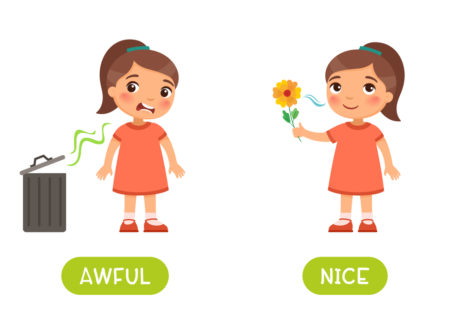
Finding different things in your home and talking about their smells can help your kids tell the difference. For example, you can talk about fridge smells, flowers, sweet baked goods, or savoury foods. These smells will help them know the difference between good and bad smells.
When your kids notice their clothes, body, or feet smell bad, they will clean up to stop the foul odour.
6. Talk about the appearance
Children can be teased or bullied at school for looking messy. Make sure they wear clean clothes, smell fresh (using soap, deodorant, or body wash), and keep good hygiene. Teach them simple grooming tasks like wearing tidy clothes, combing their hair with a hairbrush or comb, and polishing their shoes.
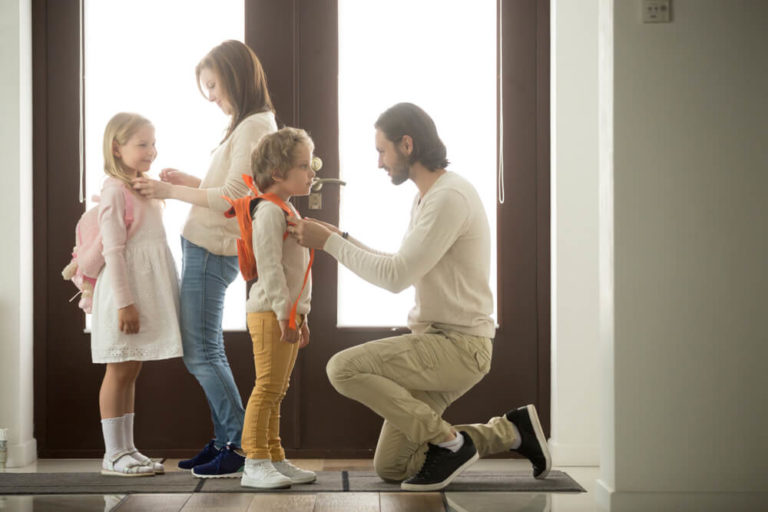
Make sure your child’s school bag and lunch box are clean. When children learn the importance of looking tidy, they will keep clean more often and develop healthy personal hygiene habits.
7. Fun with hygiene
Kids enjoy having fun and doing things they like. Make learning fun by using hygiene-themed games, poems, posters, colorful stickers, storybooks, and interactive charts. You can also use bath toys, fun-shaped soaps, and songs or timers for handwashing. This will help them learn about brushing teeth, washing hands, and keeping clean in a way they enjoy. Hygiene won’t feel boring or scary to them.
8. Lead by example
If you want your child to practise good hygiene, start by doing it yourself. Do simple things together like cleaning the house, wiping the table, washing hands, or brushing your teeth. This will help your child learn. Be a good role model by doing these tasks with them, showing personal hygiene habits, responsibility, and consistency.
9. Practice hygiene as a family
It’s easy to teach your kids good hygiene if everyone in the family practices hygiene routines like handwashing with soap, bathing or showering regularly, brushing teeth, washing hair, and keeping nails clean. Make sure all family members know why personal hygiene, clean clothes, and sanitized surfaces are important. This will help your kids follow your advice. In the end, you and your kids will enjoy better health and well-being.
10. Showing proper hygiene
Wash your hands with soap and water before eating and after using the toilet. Make sure to cover your mouth when you cough or sneeze. Brush your teeth twice a day using a toothbrush and toothpaste. Take baths regularly and keep your nails short and clean. These simple hygiene habits will help you stay healthy and happy!
4 Nurturing good personal hygiene for kids
Family is the first place where children learn. Good habits and qualities start at home. Kids learn by watching you. If you keep up with personal hygiene, they will see you and copy your habits.
Once your kids do daily hygiene tasks, teach them why hygiene is important. Use simple ways to help them learn better hygiene habits.
1. Set reminders
Set reminders for each daily hygiene activity such as morning shower, brushing teeth, handwashing, hair brushing, face washing, changing clothes, nail trimming, and using deodorant. This will help you keep an eye on your kid’s daily hygiene routine and ensure they stay healthy, clean, and confident.
2. Make it a fun learning experience
Remember, kids often lose interest or can get bored quickly while performing a routine task. Therefore, you need to turn the learning process into fun games or interactive activities. For example, attaching a storybook, poem, or song that extols the goodness of brushing teeth with a toothbrush and toothpaste, or washing hands with soap and water, will help you keep your kid’s attention on the task. Using stickers, reward charts, or bath toys can make these routines more engaging and enjoyable.
3. Put up signs
You can put up signs on the kitchen and toilet. If you put a sign like “Wash your hands” in the kitchen and the bathroom, it will remind everyone in your family to do so, including the kids. You should remember that children can’t maintain all the hygiene tasks every day. Therefore, you should make sure to prioritize and focus on each habit one at a time—like handwashing, tooth brushing, bathing, nail trimming, or hair combing—and practice it for at least 2–3 weeks.
4. Demonstrate
If you want to instil positive and healthy habits into your kids, you must explain the process of each personal hygiene task. For instance, showing and telling your kids about proper handwashing.
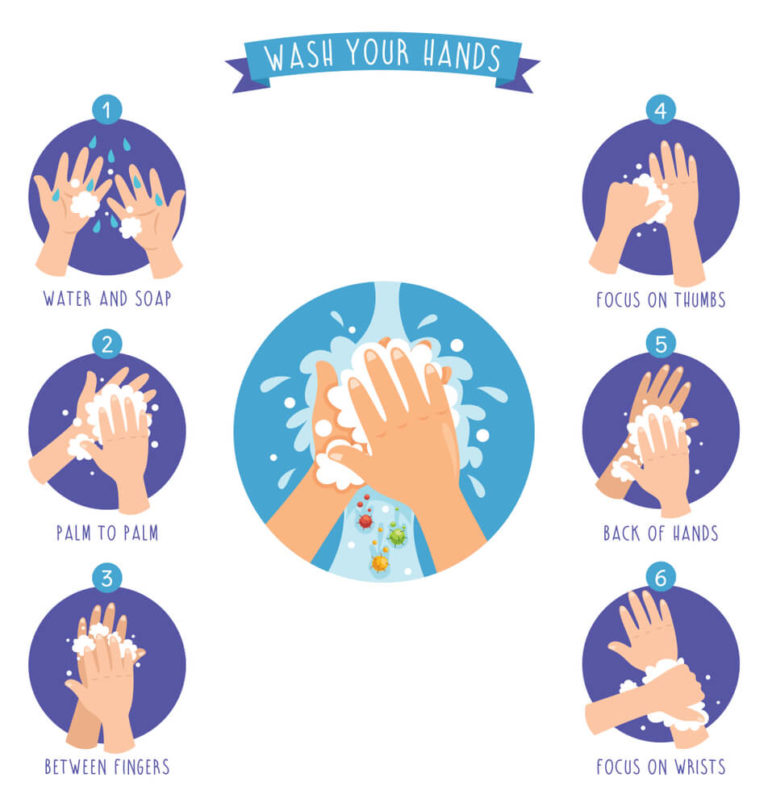
Firstly, wet your hands with clean running water and then apply soap to lather your hands, fingers, and under the nails. Rubbing your hands for at least 20 seconds is recommended. Then rinse your hands with water. And finally, dry your hands with a clean towel. You should also tell your kids about conserving water by turning the tap off when it’s not in use.
3 Personal hygiene activities for kids
Getting kids to follow hygiene rules can be hard. But kids love to play, and they learn better through games. Here are some fun activities to help kids enjoy personal hygiene.
1. Germ transfer game
It’s a fun game that you can play with your kids to teach them how germs are transferred from one person to another. You’ll only need some washable paints to play this game. Start by applying the paint on your hands when the kids are not looking at you, and then pretend to sneeze. After that, go about the direction you want and touch things around while spreading the paint. Ask your kids to follow your steps and touch the spots you have left with paints.
Now, you can ask the kids how the paints spread all around the place. Lastly, you can emphasize the fact that the kids got colours from you because you didn’t wash your hands after sneezing.
2. Glitter hands
To play this game you need glitters, soap and water. Start by applying some glitter to your kid’s hands and then ask them to wash their hands to get rid of the glitter.
The fact that glitter is naturally sticky and doesn’t go away quickly without a good rinse will make the kids wash their hands properly. Tell the kids to use soap and rub their hands for at least 30 seconds to get rid of the glitter.
3. Good habit, bad habit
This is a fun game you can play with your kids anytime and anywhere. All you need to do is, make a list of activities, including the activities your kids do. Then, tell the kids to identify which habit is good and which is bad. Through this game, you can point out your kids’ practices and remind them whether they should continue it or not. If they get the answers right, reward them with treats.
Conclusion
Poor personal hygiene makes kids more likely to catch infections. You can stop this from happening. Helping kids follow simple hygiene habits keeps them healthy and safe from germs. If they already have good habits, that’s wonderful. If not, now is the perfect time to teach them.
FAQs
What are the 10 personal hygiene for kids?
Personal hygiene for kids includes washing hands, brushing teeth, daily bathing, trimming nails, wearing clean clothes, combing hair, covering coughs, using deodorant, keeping shoes clean, and gently cleaning ears.
How to explain personal hygiene to a child?
Help kids learn personal hygiene with simple steps: wash hands, brush teeth, and take baths. Use songs, games, or fun stories. Keep it short and easy.
What is the importance of hygiene for kids?
Hygiene is key for kids to stay healthy, prevent illness, and feel good. Clean habits like washing hands, brushing teeth, and bathing stop germs from spreading. It also helps build confidence and good lifelong habits.
Why is personal hygiene important for kids?
Personal hygiene keeps kids healthy by preventing germs and infections. It reduces illness, boosts confidence, and builds lifelong good habits.
How can I teach my child about personal hygiene?
Start with simple tasks like handwashing and bathing. Use games, songs, and reminders to make learning fun and consistent.
How often should kids wash their hands?
Kids should wash their hands before eating, after using the toilet, playing outside, or touching pets to stop germs from spreading.
How do I encourage my child to brush their teeth regularly?
Make brushing fun with songs or colourful toothbrushes. Remind them to brush twice daily and visit the dentist every six months.
How do germs spread among kids?
Germs spread when kids touch dirty surfaces, sneeze or cough without covering their mouths, or share items like toys or utensils.
How can I keep my child’s hair clean and free of lice?
Wash hair twice a week, avoid sharing combs or hats, and tie long hair to prevent dirt and lice.
What are good hand hygiene habits for kids?
Good hand hygiene includes washing hands with soap for 20 seconds, trimming nails regularly, and using a handkerchief when sneezing.
How do I explain germs and bacteria to young children?
Use simple words and fun activities, like the glitter hands game, to show how germs can spread and the importance of washing hands.
How can I help my child maintain proper food hygiene?
Teach them to wash hands before eating, clean fruits and vegetables, and avoid eating undercooked foods.
Related Articles
 Jan, 21, 2026
Get a FREE Course
- Learn useful skills online free
- Get CPD accredited certificate
- Add it to your CV today!